Cabinet Refacing vs. Replacing: Which Makes More Sense?
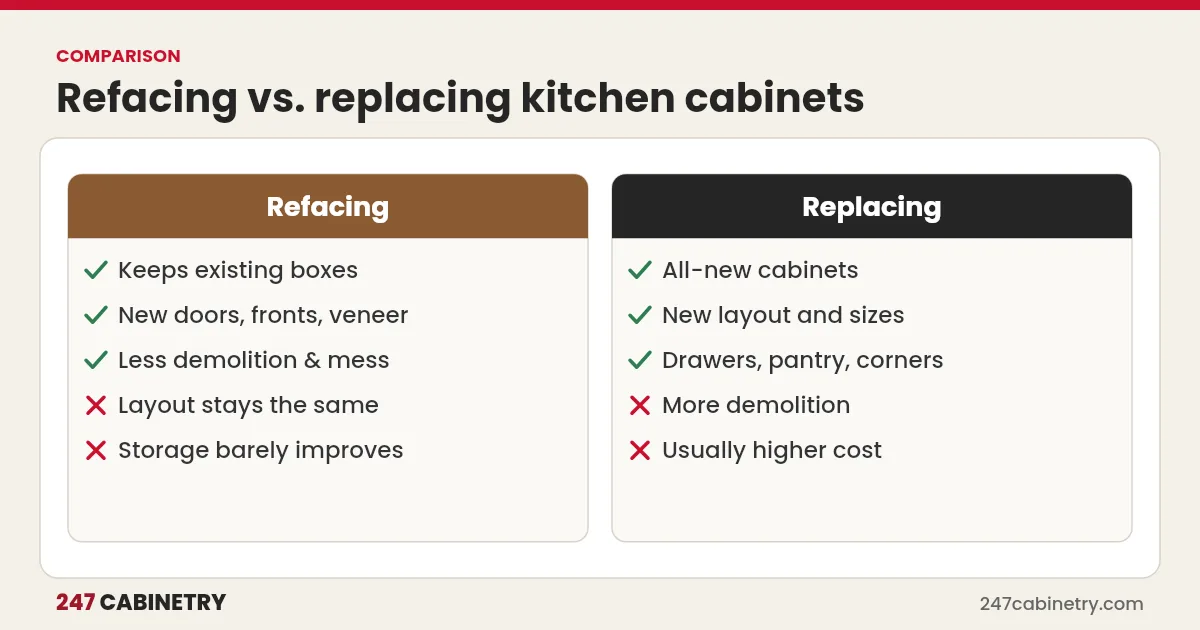
Cabinet refacing keeps the existing cabinet boxes and replaces the doors, drawer fronts and the visible face, while replacing installs entirely new cabinets. Refacing usually means less demolition and disruption, but it only makes sense when the existing boxes are sound and the layout already works. Replacing costs more but allows a new layout, new appliance sizes and much better storage.
Homeowners often ask whether they really need new cabinets. The honest answer depends on the condition of the boxes and what they want the kitchen to do differently.
What each option involves
| Refacing | Replacing | |
|---|---|---|
| Cabinet boxes | Kept | New |
| Doors and drawer fronts | New | New |
| Face frames and sides | Covered with veneer or panels | New |
| Layout changes | Minimal | Full flexibility |
| Demolition | Little | Full removal |
| Countertops | Often kept if in good condition | Usually replaced |
| Storage upgrades | Limited to accessories that fit | Any configuration |
When refacing makes sense
- The cabinet boxes are solid, dry and square.
- The current layout works and the homeowner does not want to move appliances.
- The countertops are in good condition and will stay.
- The goal is mainly a new look: new doors, color and hardware.
- The homeowner wants less disruption and a shorter project.
When replacing makes more sense
- Boxes are damaged by water, sagging, or made of weak material.
- The layout needs to change: an island, a moved sink, or an open wall.
- Appliance sizes are changing, such as a larger refrigerator or a range.
- Storage needs to improve: more drawers, a pantry, corner solutions.
- The countertops are being replaced anyway.
Check the boxes first
Before recommending refacing, inspect the cabinets closely. Look under the sink for water damage, check shelves and bottoms for sagging, and open every door and drawer. Swollen particleboard does not recover, and refacing it only hides the problem. Wood and wood products change with moisture, as the USDA Wood Handbook explains, and the EPA warns that hidden moisture can lead to mold. If the sink base is damaged, it may be replaced individually even in a refacing project.
Storage and function
Refacing improves the look but not the way the kitchen works. If the homeowner’s main complaint is too little storage, hard-to-reach corners or shelves instead of drawers, replacing gives better results. Some accessories, such as pull-out shelves or trash bins, can be added to existing boxes, but options are limited by the box sizes.
Disruption and timeline
Refacing usually involves less demolition and dust, because the boxes and often the counters stay in place. Replacement means removing everything, which may also involve flooring, plumbing and electrical work. Our kitchen remodel timeline shows how each phase adds time.
A third option: painting or refinishing
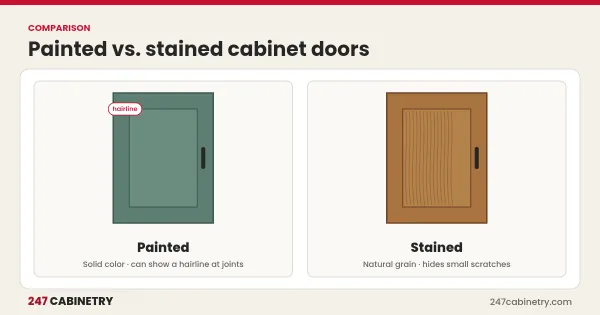
Painting or refinishing existing doors is the least expensive way to change the look, but quality depends on preparation and the type of finish. It does not change door style, and painted wood doors can show seams over time. It suits budget refreshes and rentals better than long-term remodels.
How dealers can help homeowners decide
Show both options side by side. A design for a full replacement, with a new layout and better storage, often makes the trade-off clear: the homeowner can see what they would gain. If refacing is the better choice, a rendering with new doors and finishes helps them commit. Our guide on how to present a kitchen design to homeowners covers how to compare options clearly.
Homeowners also appreciate honesty about what refacing cannot do. If the doors will look new but the drawers will still be shallow and the corner still awkward, say so up front. A homeowner who chooses refacing with clear expectations is far happier than one who expected a completely new kitchen. When the budget is the main concern, a phased plan can help: reface now, and plan a full replacement for later, or replace only the cabinets that are damaged.
What refacing usually includes
A typical refacing project replaces every door and drawer front, applies matching veneer or thin panels to the face frames and exposed cabinet sides, and adds new hinges and hardware. Many companies also offer new crown molding, light rail and toe kick, and can swap a few cabinets, such as a damaged sink base. Ask exactly what is included, because offers vary widely.
Decision checklist
| Question | Reface | Replace |
|---|---|---|
| Boxes solid and dry? | Yes | No |
| Layout stays the same? | Yes | No |
| Appliance sizes unchanged? | Yes | No |
| Storage needs met? | Yes | No |
| Countertops staying? | Yes | No |
Compare both with a design
Our kitchen design service can show a replacement layout in the line you sell, so homeowners can compare it with refacing before deciding. See pricing.
Frequently asked questions
What is cabinet refacing?
Refacing keeps the existing cabinet boxes and replaces the doors and drawer fronts, covers the face frames and exposed sides with new veneer or panels, and often adds new hardware.
Is refacing cheaper than replacing cabinets?
It often costs less because the boxes stay and there is less demolition, but prices vary by materials, kitchen size and local labor. Compare quotes for both options.
When should you replace instead of reface?
Replace when the boxes are damaged or weak, when you want a new layout or appliance sizes, or when storage needs to change, such as adding drawers or a larger pantry.
Can you change the layout when refacing?
Only minimally. Refacing keeps the existing boxes in place, so changing the layout, adding an island or moving appliances usually requires new cabinets.
Sources
Need this kitchen designed?
Upload your measurements and get 2D plans, elevations and 3D renderings in 24 hours.
Sign up for design service