Painted vs. Stained Cabinets: Durability, Maintenance and Style
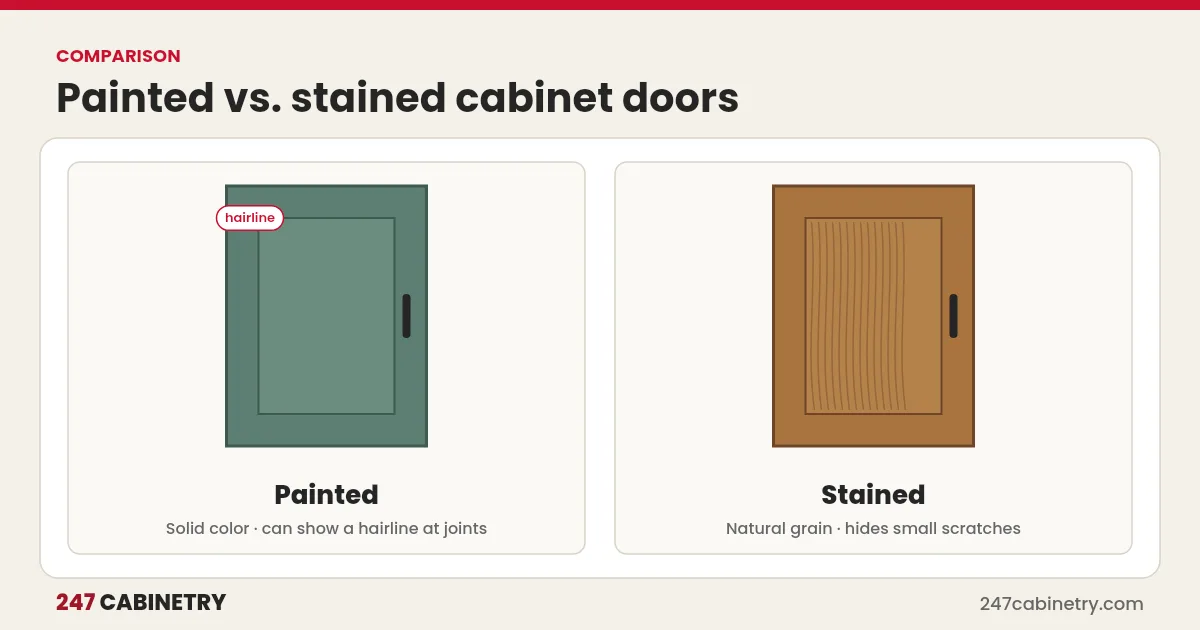
Painted cabinets give a smooth, solid color and suit modern, transitional and farmhouse kitchens, while stained cabinets show the natural wood grain and warmth. Stain hides everyday scratches and wear better and is easier to touch up. Paint can show chips on edges and fine lines at door joints as wood moves with humidity. In many factory lines, painted finishes also cost more because they need extra preparation.
Painted or stained is one of the first finish decisions homeowners face, and it affects how the kitchen looks after years of use, not just on installation day.
Side-by-side comparison
| Factor | Painted | Stained |
|---|---|---|
| Look | Smooth, solid color | Natural grain and color variation |
| Hides wear | Shows chips and dings, especially on edges | Hides small scratches well |
| Joint lines | Hairline lines can appear at door joints | Usually not noticeable |
| Touch-ups | Need exact color match | Blend more easily |
| Typical cost in factory lines | Often higher | Often lower |
| Color choice | Almost unlimited | Limited by wood species |
| Styles | Modern, transitional, farmhouse, coastal | Traditional, rustic, warm modern |
Why painted doors show lines at joints
Five-piece doors, such as shaker doors, are made from separate rails and stiles around a center panel. Wood expands and contracts with changes in humidity, as the USDA Wood Handbook explains. On stained doors the joints are part of the look. On painted doors the paint bridges the joint, and seasonal movement can show as a fine line. This is normal and expected, not a defect, and homeowners should know about it before choosing paint. Slab doors and MDF center panels reduce the effect.
Durability in daily use
Busy kitchens take knocks from pots, vacuum cleaners and children. Stained finishes hide small scratches because the grain and color variation disguise them. Painted finishes, especially light colors, show chips on edges and around handles. Quality factory finishes on both are durable; the difference is mainly how visible wear is.
Color and style
Paint offers almost any color, which makes it popular for two-tone kitchens, colored islands and coastal or farmhouse styles. Stain is limited to tones that suit the wood species, from light natural to deep espresso, but brings warmth and texture. Our guide to two-tone kitchen cabinets shows how many kitchens combine both.
Cost
In many factory cabinet lines, painted finishes are in a higher price group than stained finishes, because they require more sanding, priming and coats. Exact differences depend on the line, door style and wood. Compare price groups when quoting.
Cleaning and maintenance
Both finishes clean with a soft cloth and mild soap. Avoid abrasive cleaners and harsh chemicals. Wipe spills promptly, especially near the sink and dishwasher. Keep indoor humidity steady to reduce wood movement. Ask the manufacturer for touch-up kits matched to the finish.
Indoor air and finishes
Factory-applied finishes are cured before the cabinets arrive, which is one reason many homeowners prefer them to on-site painting. The EPA notes that some paints and coatings release volatile organic compounds, so when refinishing on site, ventilate well and follow the product instructions.
How to help homeowners choose
Ask how the kitchen is used and how the homeowner feels about visible wear. A busy family kitchen might suit stain, or paint in a mid-tone that hides marks. A homeowner who loves a crisp white kitchen should see real painted samples and understand joint lines. Show both in renderings of their kitchen so they can compare. Our article on how to choose kitchen cabinets covers the other decisions.
Mixing paint and stain
Many kitchens use both: painted perimeter cabinets with a stained island, or stained lower cabinets with painted uppers. Mixing gives the clean look of paint and the warmth of wood. Keep the door style and hardware consistent so the kitchen feels planned. Check that the cabinet line offers both finishes in the same door style, and order samples of each so the homeowner can see them together with the countertop.
Questions to ask before choosing
Ask the homeowner a few simple questions. How do you feel about seeing natural wood grain? Do you have young children or pets that will knock the cabinets? Will you mind a fine line at a door joint in winter? Do you want a color, or a wood tone? The answers usually point clearly toward paint, stain or a mix of both.
Finish choice checklist
| Item | Done |
|---|---|
| Painted, stained or both decided | |
| Samples viewed in the room’s light | |
| Joint-line expectation explained | |
| Price group checked | |
| Touch-up kit ordered | |
| Rendering approved |
See the finish before ordering
Our kitchen design service renders the kitchen in your actual door style and finish, painted or stained, so homeowners can compare before committing. See also shaker vs. flat-panel doors.
Frequently asked questions
Are painted or stained cabinets more durable?
Both can be durable with a quality factory finish. Stained cabinets tend to hide everyday scratches and wear better, while painted cabinets can show chips, especially on edges, and hairline lines at joints.
Why do painted cabinets crack at the joints?
Wood expands and contracts with humidity. On painted five-piece doors, this movement can show as fine lines where the rails and stiles meet. It is normal wood movement, not a defect.
Do painted cabinets cost more than stained?
Often yes in factory cabinet lines, because painted finishes need more preparation and coats. Check the price groups in the specific line.
Which is easier to touch up?
Stained cabinets are usually easier, because small marks blend with the grain. Painted cabinets need an exact color match, and touch-ups can be visible.
Sources
Need this kitchen designed?
Upload your measurements and get 2D plans, elevations and 3D renderings in 24 hours.
Sign up for design service