Two-Tone Kitchen Cabinets: How to Plan Color Combinations
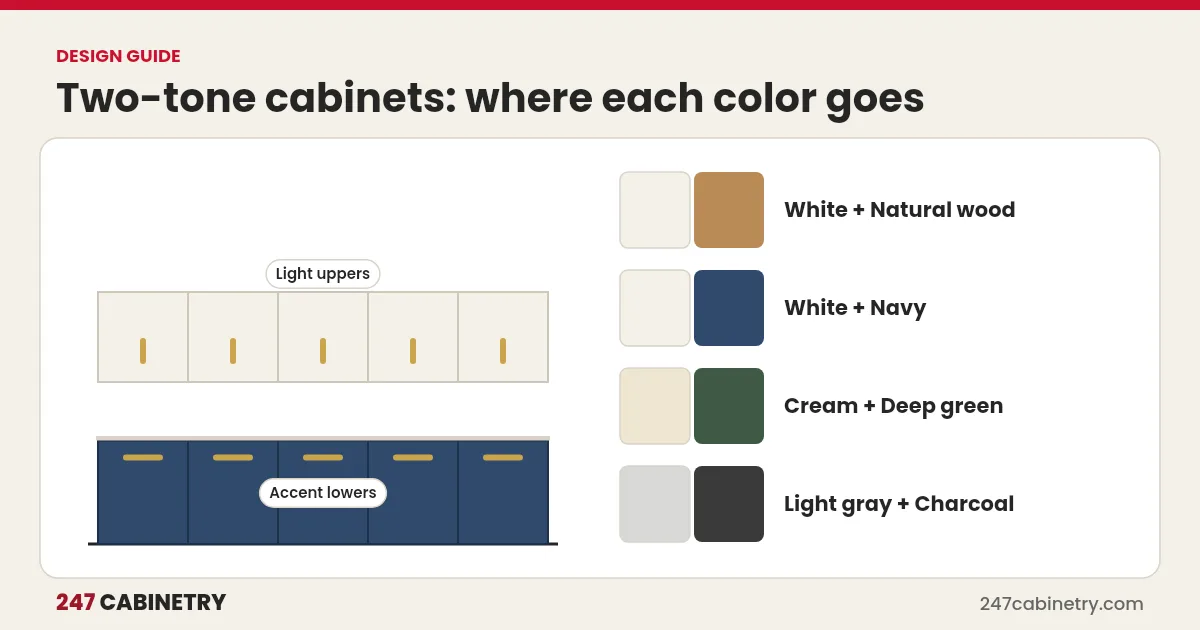
Two-tone kitchen cabinets use one main color and one accent, most often a contrasting island or darker lower cabinets with lighter uppers. Popular combinations include white with natural wood, white with navy, and cream with deep green. Keep hardware, counters and backsplash consistent so the contrast feels planned, and always check real samples in the room’s light and in a rendering before ordering.
Two-tone kitchens add depth and personality without committing the whole room to a bold color. They are also a good way to highlight an island or to bring warmth into an all-white kitchen.
Where to use each color
| Approach | How it works | Effect |
|---|---|---|
| Contrasting island | Perimeter in one color, island in another | Makes the island a focal point |
| Light uppers, dark lowers | Wall cabinets lighter than base cabinets | Grounded and open at the same time |
| Feature wall or hutch | One run or tall unit in the accent color | Adds interest without changing everything |
| Wood and paint | Painted cabinets with wood accents | Warmth with a clean look |
The simplest approach for most kitchens is a contrasting island, because it is easy to visualize and easy to change later.
Popular color combinations
| Main color | Accent | Mood |
|---|---|---|
| White | Natural wood | Warm, light, timeless |
| White | Navy | Crisp, classic, coastal |
| Cream | Sage or deep green | Soft, natural, traditional |
| Light gray | Charcoal | Calm, modern |
| Natural wood | Black | Bold, contemporary |
Trends change, so lean toward combinations the homeowner loves rather than what is popular this year.
Balancing light and dark
A useful rule of thumb from interior design is to use one dominant color, a secondary color and a small accent. In a kitchen, that might mean mostly white cabinets, a wood island and black hardware. Dark colors absorb light, so use them on lower cabinets or the island in rooms with limited daylight, and keep wall cabinets and the backsplash lighter.
Hardware, counters and backsplash
When the cabinets carry two colors, the rest of the kitchen should calm things down:
- One hardware finish across both colors, such as brushed brass or matte black. See our cabinet hardware placement guide.
- One countertop across perimeter and island, or a deliberate contrast on the island.
- A simple backsplash that does not compete with the cabinets.
Wood and paint together
Wood and paint behave differently. Stained wood shows natural grain and color variation, and wood moves slightly with humidity, as the USDA Wood Handbook explains. Painted finishes look uniform but can show hairline lines at joints. Choose finishes from the same cabinet line where possible so construction, door style and quality match.
Testing before ordering
- Look at real door samples in the kitchen, in daylight and at night.
- Place samples side by side with the countertop and flooring.
- See it in a rendering of the actual kitchen. Renderings show proportions that small samples cannot.
- Check the order carefully: two finishes mean more chances to mix up items.
Our article on bringing kitchen designs to life explains how renderings help homeowners decide.
Common two-tone mistakes
- Two strong colors fighting for attention.
- Dark cabinets in a dark room with no contrast.
- Different hardware finishes on each color.
- Accent color used in too many small places, making the kitchen look busy.
- Ordering errors, such as an island panel in the wrong finish.
Two-tone kitchens and resale
Homeowners sometimes worry that a bold color will hurt resale. A neutral main color with a colored island is a safe middle ground, because the island is the easiest part to repaint or replace later. For homeowners planning to stay long term, choosing colors they love matters more than predicting future buyers’ tastes. Either way, a professional rendering shows how the combination will feel at full scale, which removes much of the worry.
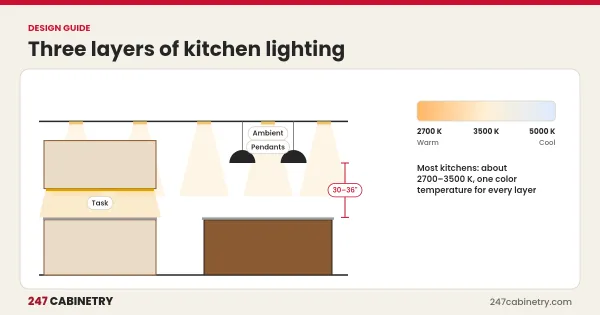
Lighting changes colors too. Warm bulbs make whites look creamy and greens look softer, while cool bulbs make grays look bluer. Check samples under the planned lighting, not only in the showroom.
Two-tone planning checklist
| Item | Done |
|---|---|
| Main and accent colors chosen | |
| Placement decided (island, lowers, feature) | |
| Hardware finish consistent | |
| Countertop and backsplash coordinated | |
| Samples viewed in the room | |
| Rendering approved |
See both colors before ordering
Our kitchen design service renders the kitchen in your actual door styles and finishes, so homeowners can compare color combinations before committing. See also shaker vs. flat-panel doors.
Frequently asked questions
What are two-tone kitchen cabinets?
Two-tone kitchens use two cabinet colors or finishes, such as painted perimeter cabinets with a wood or contrasting island, or lighter wall cabinets with darker base cabinets.
Where should the darker color go in a two-tone kitchen?
Usually on the lower cabinets or the island. Darker lowers ground the room, while lighter uppers keep it bright and open.
What colors go well together for two-tone cabinets?
Popular combinations include white with natural wood, white with navy, cream with sage or deep green, and light gray with charcoal.
Do two-tone kitchens cost more?
They can, slightly, if the two finishes come from different price groups, and ordering must track two finishes carefully. Check the cabinet line’s pricing.
Sources
Need this kitchen designed?
Upload your measurements and get 2D plans, elevations and 3D renderings in 24 hours.
Sign up for design service