Cabinet Hardware Placement Guide: Where to Put Knobs and Pulls
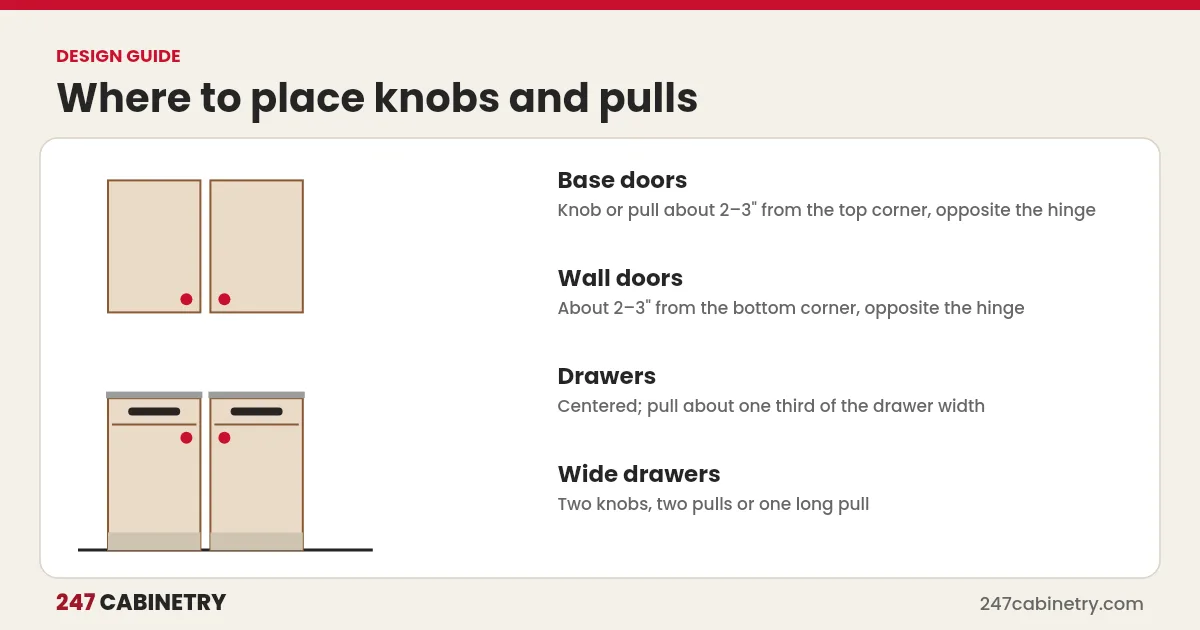
Place knobs and pulls on cabinet doors on the side opposite the hinges, about 2 to 3 inches from the top corner on base doors and the same distance from the bottom corner on wall doors. Center hardware on drawer fronts, or on the top rail of shaker drawers, and use a pull about one third of the drawer width or two pieces on very wide drawers. A template keeps every piece aligned.
Hardware is one of the last details installed, but it is one of the first things people touch. Consistent placement makes a kitchen look finished, and comfortable sizing makes it easy to use every day.
Placement by cabinet type
| Cabinet | Knob placement | Pull placement |
|---|---|---|
| Base cabinet door | Opposite the hinge, about 2 to 3 inches from the top corner | Vertical, near the top corner, aligned with the stile |
| Wall cabinet door | Opposite the hinge, about 2 to 3 inches from the bottom corner | Vertical, near the bottom corner |
| Tall pantry door | At a comfortable hand height, often aligned with base hardware | Vertical, often longer, centered at hand height |
| Drawer | Centered on the front | Centered horizontally |
| Wide drawer | Two knobs, spaced evenly | One long pull or two pulls |
These are common conventions, not strict rules. The goal is consistency across the kitchen.
Drawer fronts
On slab drawer fronts, center the hardware horizontally and either center it vertically or place it slightly above center. On shaker drawer fronts, center it on the top rail for a classic look, or in the middle of the recessed panel for a different effect, but choose one approach and keep it throughout the kitchen. Stacked drawers look best when all pulls line up vertically.
Sizing pulls
| Drawer width | Common choice |
|---|---|
| Up to about 18 inches | One knob or a short pull |
| About 18 to 30 inches | One pull about one third of the width |
| Over about 30 inches | Two knobs, two pulls or one long pull |
Pull length is measured center to center between the screw holes. Check that the pull fits within the rail on shaker doors and drawers.
Knobs, pulls or both?
Knobs suit traditional kitchens and doors, while pulls are easier to grab and suit drawers and modern designs. A common approach is knobs on doors and pulls on drawers. An all-pull kitchen looks streamlined. Edge pulls and integrated finger grooves give a minimal look but may be harder for some people to use.
Comfort and accessibility
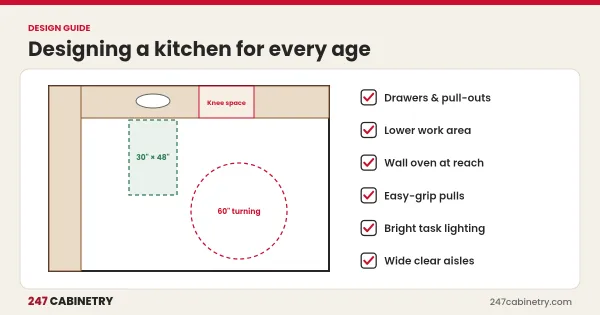
Hardware that is easy to grip helps everyone, especially older adults and people with arthritis. Pulls are generally easier than small knobs. The 2010 ADA Standards say operable parts in covered spaces should work with one hand without tight grasping, pinching or twisting of the wrist, which is a useful benchmark even in private homes. Avoid very small knobs on heavy drawers.
Installation tips
- Decide placement on paper first, using the elevations. See our guide to kitchen elevation drawings.
- Use a template or jig for consistent hole positions.
- Check what is behind the front, such as drawer boxes or hinges, before drilling.
- Drill from the front with a backer to avoid tear-out.
- Install one cabinet, step back and check before doing the rest.
Common hardware mistakes
- Different heights on doors and drawers that should line up.
- Pulls too small for wide drawers, which also makes them harder to open.
- Knobs placed where they hit adjacent hardware or appliances, especially at corners. Corner fillers prevent this; see corner cabinet solutions.
- Mixed finishes that clash with faucets and lighting.
Matching hardware to style
Hardware can change the character of a kitchen without changing the cabinets. Slim bar pulls in matte black or stainless suit modern kitchens. Cup pulls and round knobs in brass or bronze suit traditional and farmhouse styles. On two-tone kitchens, one hardware finish across both colors ties the design together. Show hardware in the renderings so the homeowner sees the effect before ordering, and order a sample piece to check the finish against faucets and lighting.
Budget matters too. Hardware is priced per piece, and a large kitchen may need dozens of knobs and pulls, so a small difference per piece adds up. Count the pieces from the elevations early, so the hardware line in the quote is accurate.
Hardware checklist
| Item | Done |
|---|---|
| Knob or pull chosen for doors and drawers | |
| Sizes set for wide drawers | |
| Placement marked on elevations | |
| Finish matched to faucet and lighting | |
| Template or jig ready | |
| Clearance at corners and appliances checked |
Plan hardware in the design
Our kitchen design service shows hardware in the 3D renderings so homeowners can see the effect before ordering. See also two-tone kitchen cabinets for coordinating finishes.
Frequently asked questions
Where should knobs go on kitchen cabinet doors?
On the side opposite the hinges, usually about 2 to 3 inches from the top corner on base cabinet doors and the same distance from the bottom corner on wall cabinet doors.
Where should pulls go on drawers?
Centered horizontally on the drawer front. On shaker drawer fronts, many installers center the pull on the top rail; on slab fronts, centered vertically or slightly above center.
What size pull should I use on a drawer?
A common rule of thumb is a pull about one third of the drawer width. Very wide drawers may use two knobs or two pulls.
Should knobs and pulls be mixed?
Many kitchens use knobs on doors and pulls on drawers, or pulls everywhere for a modern look. Keep the finish and style consistent.
Sources
Need this kitchen designed?
Upload your measurements and get 2D plans, elevations and 3D renderings in 24 hours.
Sign up for design service